

By Ash Estevan
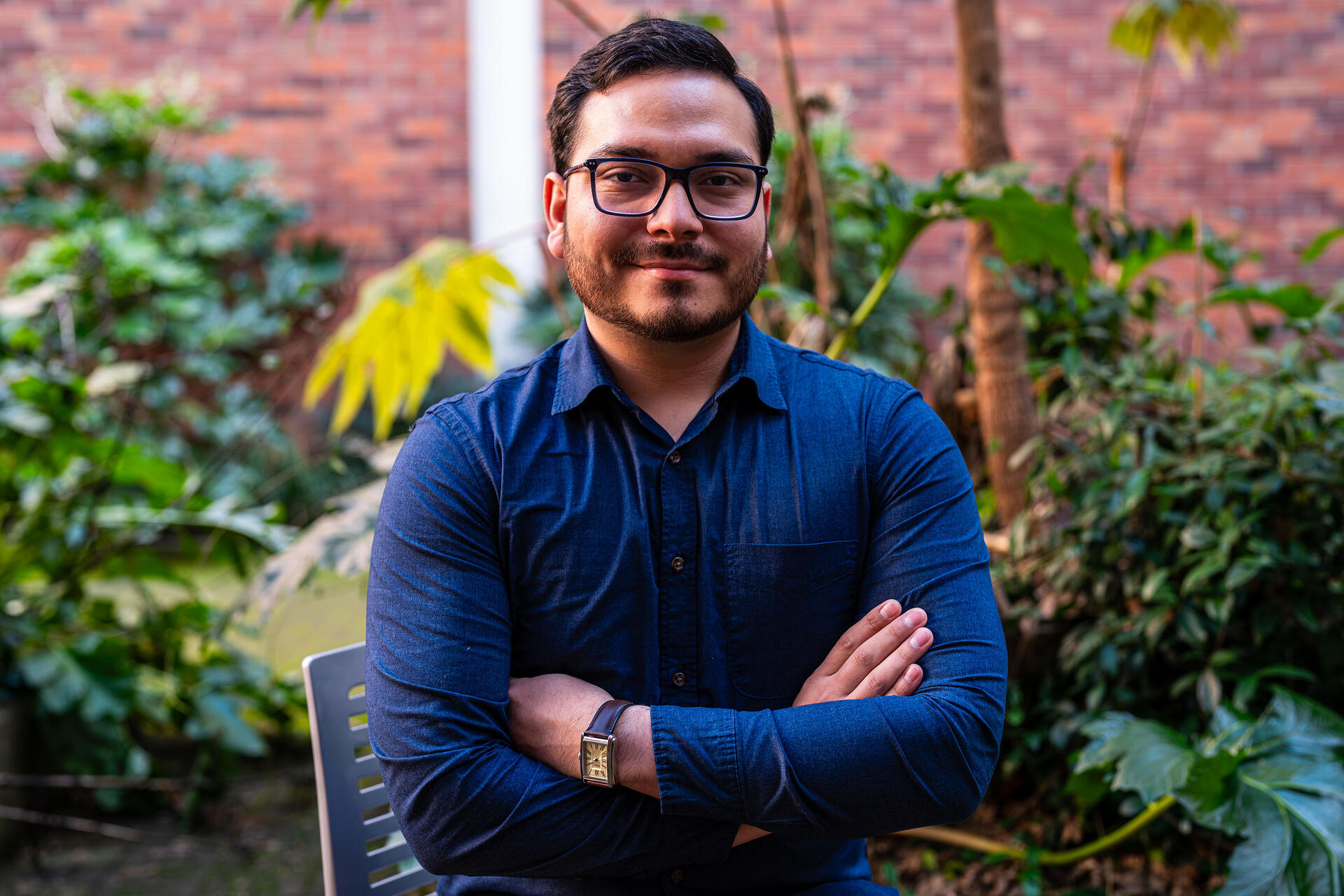
Andres Pinos (he/him) wants to answer the question: what will happen to Oregon’s coast if scientist’s effort to reintroduce kelp succeed? He joins a rich history of kelp research at Oregon State University aimed at restoration.
Kelp is important to the Oregon Coast because it supports biodiversity and sea life.
“These (kelp) ecosystems provide critical habitat, support fisheries, sequester carbon, and protect coastlines from erosion, thereby delivering substantial ecological, economic, and societal benefits,” said Andres.
Unlike previous research completed at Oregon State, Andres has started his research not with the question “how” but rather, “what if we are successful?”
Ultimately, Andres wants to answer the question: “How will Oregon’s ecosystem react to the reintroduction of kelp?”
Andres’ working title for his project is “Multispecies Modeling of Kelp, Urchins, Dungeness Crab, and Sea Otters: Insights for Oregon Kelp Forest Management.” He is working with Dr. Will White, an associate professor at Oregon State specializing in fisheries oceanography and population dynamics, spatial fisheries management and climate change effects on fisheries.
Andres is in the second year of his master’s program in Fisheries, Wildlife and Conservation Science at Oregon State, completing a thesis project funded by the Oregon Ocean Science Trust.
“Understanding and managing kelp forests is essential to ensure their persistence and recovery. In this context, kelp forest restoration encompasses the range of management actions aimed at promoting the recovery and resilience of these systems,” said Andres.
For Andres, the opportunity to expand this work is more than just simulating answers; it expands the reach of science.
“It’s cool to preserve nature because nature is beautiful,” said Andres. “The kelp will have an important positive impact on the ecosystem, and preserving the ecosystem will allow fisheries, as an industry to keep going.”
Oregon legislators established the Oregon Ocean Science Trust in 2013 to fund research, monitor innovation, promote collaboration and grant programs to enhance Oregon’s capacity for peer-reviewed scientific ocean and coastal research.
“Several management strategies have been proposed, including urchin removal, kelp seeding and sea otter reintroduction; their effectiveness remains uncertain,” said Andres. “Key unknowns include the magnitude of effort required to achieve recovery and the potential for unintended ecosystem-level consequences, such as negative impacts on commercially important species like Dungeness crab.”
Andres’ research and method focus on likely scenarios of what could happen once kelp is reintroduced. The focus of Andres’ research addresses why kelp is struggling and how management strategies he simulates using a mathematical model will contribute to understanding the outcome of kelp restoration.
Andres hails from the port city of Manta, Ecuador. Fisheries science has always been important to him, making top-ranked Oregon State an easy choice for graduate school.
The ports of Manta share familiarity with the Oregon coast, Andres recognized. He found his way to Oregon State through continued encouragement and connection from his advisors and mentors and how enthusiastically his peers rally behind him.
Andres’s goal is to use math modeling to simulate outcomes of kelp restoration on the ecosystem. Through simulation and model predictability, Andres says his research will help understand what will happen to the ecosystem once the kelp is reintroduced.
“To address these uncertainties, I developed a mathematical model to simulate ecosystem dynamics and species interactions. This approach enables the evaluation of alternative management actions and their likely outcomes, thereby reducing uncertainty and providing a more informed basis for identifying effective and feasible restoration strategies,” said Andres.
Andres’ model is substantiated by field studies and the progress in his project predictions and model findings shows promise for effective, less expensive kelp reintroduction management on Oregon’s coast.
Andres intends to enter the professional industry once he completes his master’s degree.
Andres wants to take some time to expand his professional portfolio and collaborate with other professionals working in fisheries management.
Andres’ desire to answer questions for future research shines through in his work, and he hopes to refine his model and advance his research.
Andres knows his research carries a weight of importance and aspires to keep contributing to the field of fisheries science and resource management before applying to Ph.D. programs.
“It’s important that I go into the industry. The reason is considering the human factor,” said Andres. “This is why we do management of resources, it’s so that resources are still there in the future for other people to use.”